


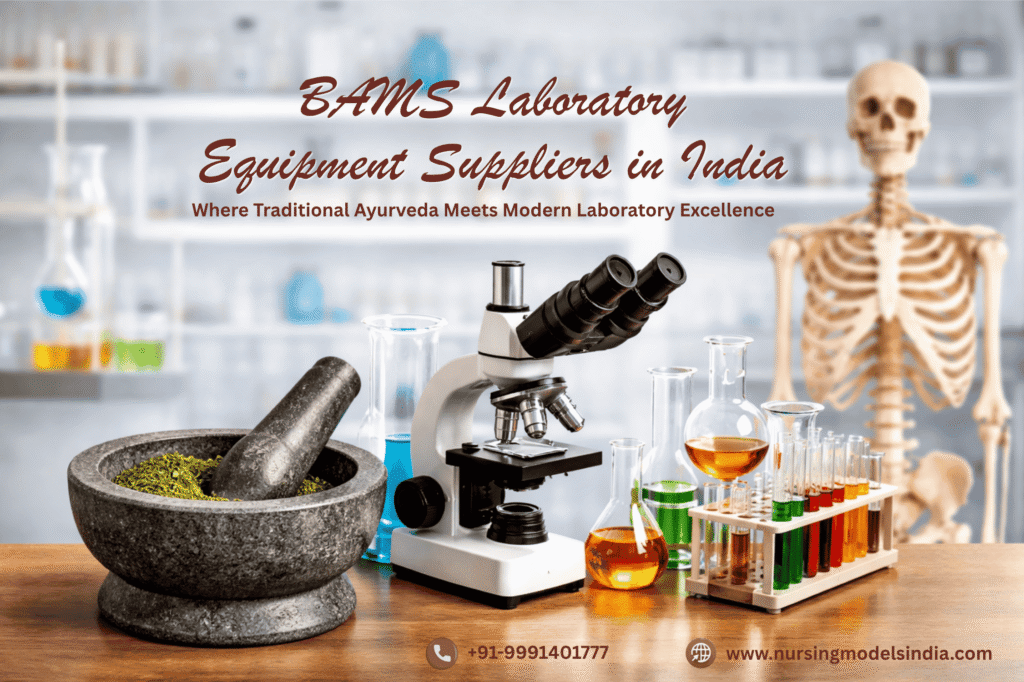
Establishment of a BAMS laboratory is among the foremost processes to any Ayurvedic college that seeks to provide quality education and be in line with the regulations. Regarding the necessary equipment to build a complete operational laboratory, every single piece of equipment matters, starting with those that form the basic part of the laboratory to the ones that are department-specific. It is also important to select the appropriate supplier and this will guarantee quality, compliance and long-run reliability.
This guide will discuss the best points when choosing to purchase BAMS laboratory equipment suppliers in India, as well as the information on costs and their requirements. We will also point out the significance of such core tools as Khalva Yantra which are central in Ayurvedic pharmaceutical studies.
Understanding BAMS Laboratory Requirements
A standard BAMS lab is not limited to a single room or setup. It includes multiple specialized laboratories such as:
- Rasa Shastra & Bhaishajya Kalpana Lab
- Dravyaguna Lab
- Kriya Sharir Lab
- Anatomy & Physiology Lab
Each lab requires specific instruments and equipment as per academic and regulatory guidelines. Colleges must ensure that all equipment meets the required standards to avoid compliance issues during inspections.
Importance of Choosing the Right Equipment Supplier
Selecting a reliable supplier is critical for the success of your laboratory setup. A professional supplier does more than just provide equipment—they offer complete support, including planning, customization, and installation.
Top suppliers typically provide:
- High-quality and durable equipment
- Complete lab setup solutions
- Compliance with guidelines
- Installation and after-sales support
Working with experienced suppliers ensures that your lab is set up efficiently and meets all academic requirements.
Key Equipment Required in BAMS Laboratories
1. Rasa Shastra Lab Equipment
This is where Ayurvedic medicines are prepared. The most important tool in this lab is the khalva yantra, which is used for grinding and mixing herbal and mineral substances.
Other equipment includes:
- Heating devices
- Pulverizers
- Storage containers
2. Dravyaguna Lab Equipment
Includes:
- Microscopes
- Herbarium sheets
- Storage units
3. Kriya Sharir Lab Equipment
Includes:
- Charts and models
- Diagnostic tools
4. Anatomy Lab Equipment
Includes:
- Skeleton models
- Dissection tables
- Specimens
Cost of BAMS Lab Setup in India
The cost of setting up a BAMS lab depends on:
- Number of departments
- Equipment quality
- Customization
- Installation support
Generally, costs can range from moderate to high depending on the level of setup. Even traditional tools should be chosen carefully to ensure durability and proper functionality.
What to Look for in a BAMS Equipment Supplier
Before choosing a supplier, consider:
- Experience in BAMS lab setups
- Turnkey solutions
- Customization options
- Compliance with guidelines
- Strong after-sales support
Why Quality Equipment Matters
High-quality equipment ensures:
- Better practical learning
- Accurate results
- Long-term cost savings
Final Thoughts
The establishment of a BAMS lab is a serious matter that needs proper planning, quality equipment, and the correct supplier. Basic tools to the instruments that are highly specific to the lab such as the Khalva yantra are all part of assembling a quality and conforming laboratory. Colleges must never work with inexperienced suppliers that only provide partial setup solutions as they will not be successful in the long run.
Frequently Asked Questions (FAQs)
1. What is the cost of setting up a BAMS lab in India?
The cost of a BAMS lab depends on equipment quality, number of departments, and customization. It can vary from a basic setup to a fully advanced laboratory.
2. Which labs are required in a BAMS college?
A standard BAMS lab setup includes Rasa Shastra, Dravyaguna, Kriya Sharir, and Anatomy labs, each with specific equipment requirements.
3. How to choose the best BAMS laboratory equipment supplier?
Look for suppliers with experience in BAMS lab setup, who offer turnkey solutions, quality equipment, and after-sales support.
4. Why is Khalva yantra important in Ayurvedic labs?
The Khalva yantra plays a crucial role in preparing Ayurvedic medicines by ensuring proper grinding and blending of herbal and mineral substances.